
Bibliotheca Sumeru · The Library of Sumeru Chess
Sumeru Library
Essays on the empires, wars, beliefs and discoveries behind every chapter of Sumeru Chess — with maps, sources and the cards of each age.
Empires, armies, territory and culture, age by age — one shelf for each chapter of Sumeru Chess.
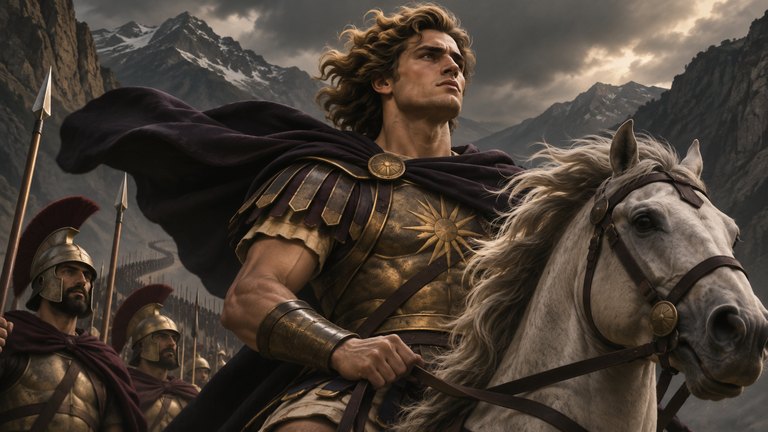 CHAPTER II · c. 336–221 BCEThe March of Alexander
4 essays
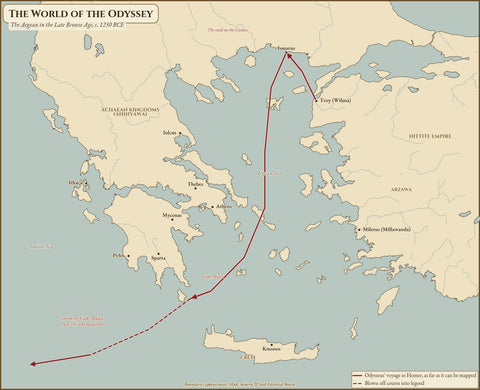 Was Odysseus Real? The Bronze Age World Behind The Odyssey
No tablet or tomb names Odysseus. But Troy was a real city, the palaces of his fellow kings have been dug up, and the world Homer describes left ruins from Ithaca to the Dardanelles.
Sumeru & Seed Editorial Board · 5 min read
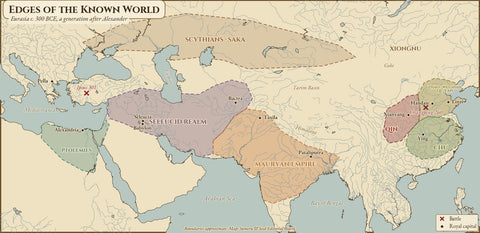 Edges of the Known World: India, the Scythian Steppe and Warring-States China, c. 330–221 BCE
When Alexander's army turned back at the Beas, it stood at the edge of the Greek map — but not of the world. Beyond it, a new Indian empire, the riders of the steppe...
Sumeru & Seed Editorial Board · 7 min read
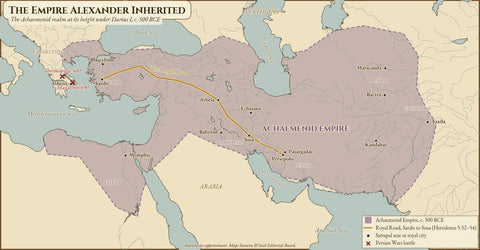 The Empire Alexander Inherited: Satrapies, Roads and Tribute in Achaemenid Persia
Greek writers called the Persians soft and decadent. Yet the Achaemenids ruled some thirty peoples from Libya to the Indus for two centuries — with roads, couriers, accountants and a remarkable tolerance for local...
Sumeru & Seed Editorial Board · 6 min read
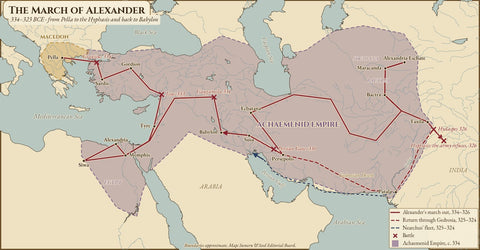 From the Granicus to the Hyphasis: How Alexander's Army Conquered Persia
In eleven years a Macedonian army walked from the Hellespont to the Punjab and destroyed the largest empire the world had yet seen. What kind of army could do that — and why did...
Sumeru & Seed Editorial Board · 7 min read
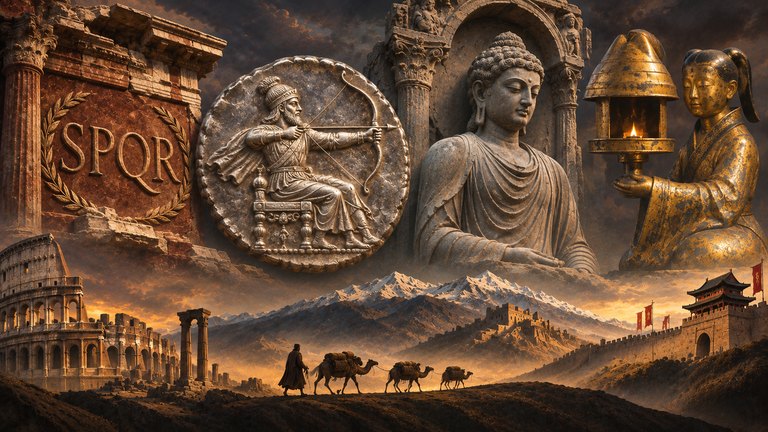 CHAPTER III · c. 300 BCE – 200 CERome, Parthia, Kushan and Han
10 essays
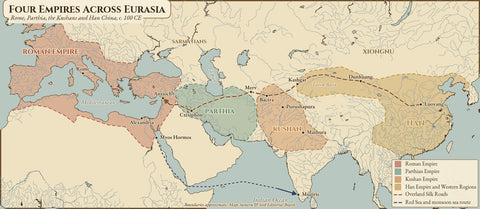 The Silk Road: How Rome and Han China Were Joined
No one in antiquity called it the Silk Road, and no merchant travelled all of it. It was a chain of roads, oases and harbours along which silk, glass, horses and religions passed from...
Sumeru & Seed Editorial Board · 4 min read
 The Punic Wars (264–146 BC): Rome against Carthage
Three wars in a little over a century decided who would rule the Mediterranean. Rome began them as an Italian land power without a fleet and ended them as the only great power in...
Sumeru & Seed Editorial Board · 4 min read
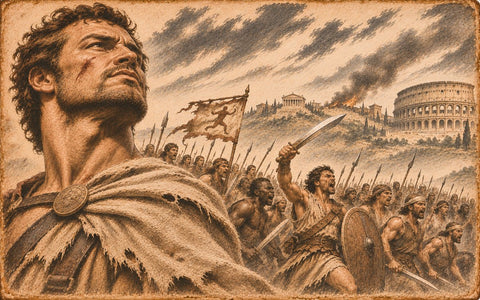 The Third Servile War (73–71 BC): Spartacus against Rome
In 73 BC some seventy gladiators broke out of a school at Capua. Within a year they led an army of tens of thousands up and down Italy. It took Rome eight legions and...
Sumeru & Seed Editorial Board · 4 min read
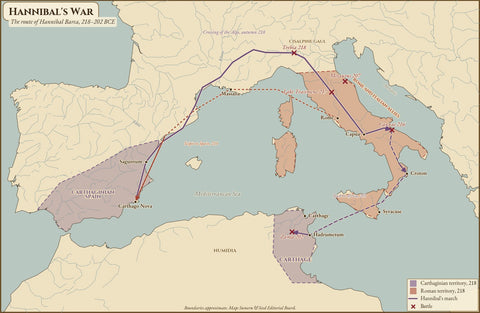 The Second Punic War (218–201 BC): Hannibal against Rome
For seventeen years Rome and Carthage fought for the western Mediterranean. Hannibal crossed the Alps and destroyed three Roman armies; Rome refused to make peace, and ended the war at the gates of Carthage.
Sumeru & Seed Editorial Board · 4 min read
 Kanishka's World: The Kushans, Gandharan Art and the Road of Buddhism to China
Descended from nomads driven out of China, the Kushan kings ruled from the Oxus to the Ganges, prayed to Greek, Iranian and Indian gods, and presided over the moment when the Buddha first took...
Sumeru & Seed Editorial Board · 6 min read
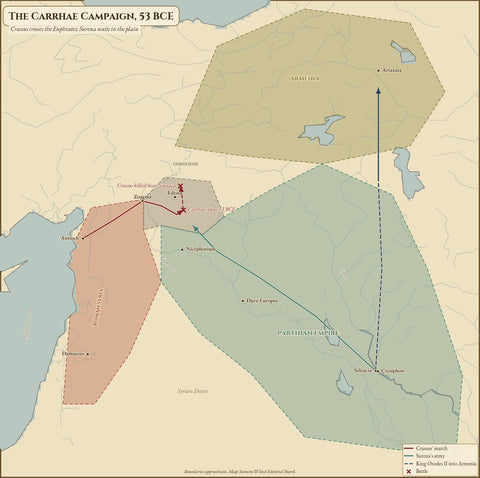 Carrhae and the Horse Archer: How Parthia Defeated Rome
In June 53 BCE the richest man in Rome led seven legions into the plains of northern Mesopotamia. A few days later most of them were dead or captive. Carrhae was not bad luck...
Sumeru & Seed Editorial Board · 6 min read
 Four Empires Across Eurasia: Rome, Parthia, the Kushans and Han China
Around 100 CE four great states ruled a continuous belt of territory from the Atlantic to the Pacific. How big were they, how were they governed, and how much did they know about one...
Sumeru & Seed Editorial Board · 7 min read
 A Roman Commercial Expedition to China in 100 CE
A study of Roman contact with the Han frontier c.100 CE, arguing for indirect access via Silk Road networks — Lin, Meicun, School of Archaeology and Museology, Peking University.
Sumeru & Seed Editorial Board · 3 min read
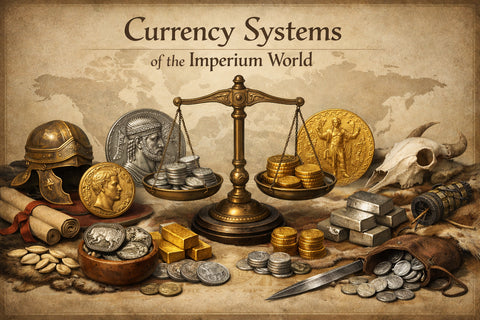 Currency Systems of the Imperium World
A unified framework for comparing monetary systems (c. 300 BCE – 200 CE), based on silver and gold weight, enabling consistent valuation of luxury and commodity cards.
Sumeru & Seed Editorial Board · 3 min read
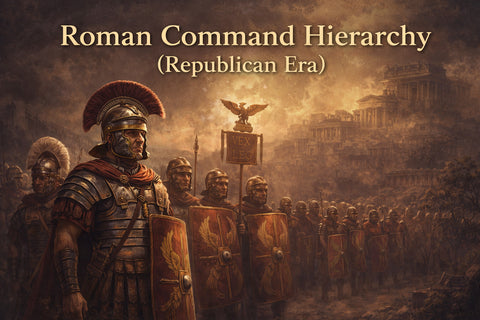 Command Hierarchy of the Roman Republic
A structured analysis of the Roman Republican command hierarchy, examining how imperium, institutional roles, and layered leadership enabled coordination, discipline, and strategic effectiveness across the Roman military system.
Sumeru & Seed Editorial Board · 1 min read


 CHAPTER IV · c. 750–1000 CEThe View of the Raven and the Falcon
3 essays
 An Elephant for Charlemagne: Franks, Byzantines and Abbasids around the Year 800
In July 802 an Indian elephant named Abul-Abbas walked into Aachen, a gift from Harun al-Rashid to Charlemagne. The story of how it got there opens a window on the diplomacy, trade and rivalries...
Sumeru & Seed Editorial Board · 6 min read
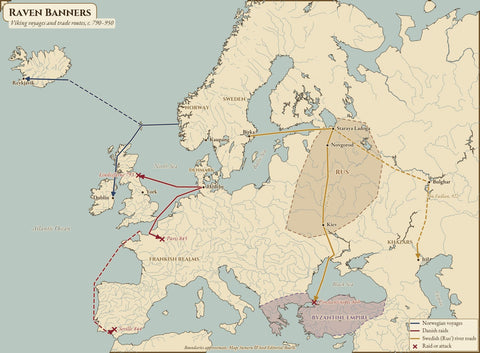 Raven Banners: The Vikings from Lindisfarne to Constantinople
For two centuries Scandinavian ships carried raiders, traders and settlers from Greenland to the Caspian. The same men who burned monasteries in England sold furs in Baghdad's markets and guarded the emperor in Constantinople.
Sumeru & Seed Editorial Board · 6 min read
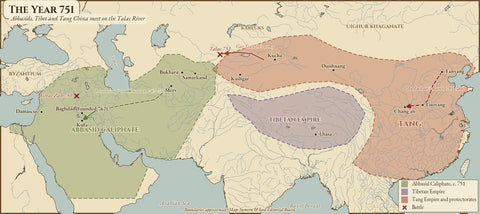 The Year 751: Talas, the Abbasid Revolution and the Crisis of Tang China
Within five years in the middle of the eighth century, a revolution in Khurasan created the Abbasid caliphate, an Arab and a Chinese army met on the Talas River, and a rebellion broke the...
Sumeru & Seed Editorial Board · 6 min read

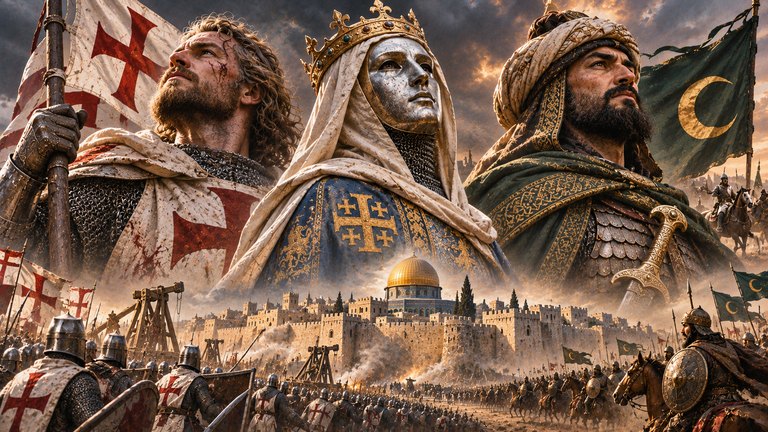 CHAPTER V · c. 1071–1200 CEThe Clash of Faiths
4 essays
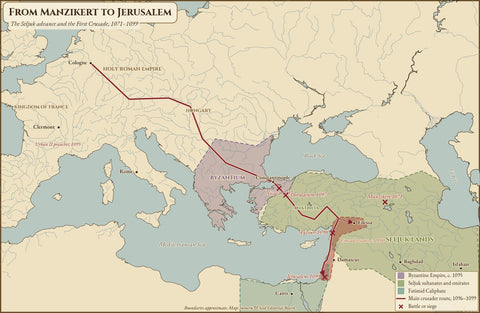 The Crusades (1095–1291): A History of the Wars for Jerusalem
In 1095 a pope asked the knights of western Europe to march to Jerusalem. For two centuries afterwards armies went east, four Latin states rose on the coast of Syria and Palestine, and Muslim...
Sumeru & Seed Editorial Board · 4 min read
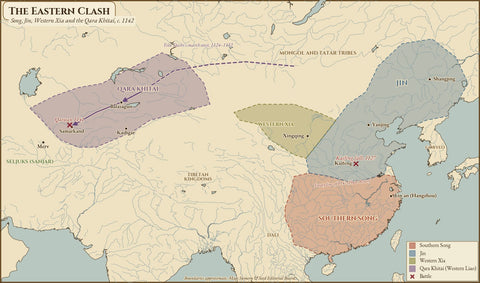 The Eastern Clash: Song, Jin, the Qara Khitai and the Legend of Prester John
While crusaders and Turks fought over Jerusalem, a different struggle reshaped East Asia. Jurchen horsemen took northern China, a Khitan prince founded an empire in Central Asia — and his victory over a Muslim...
Sumeru & Seed Editorial Board · 6 min read
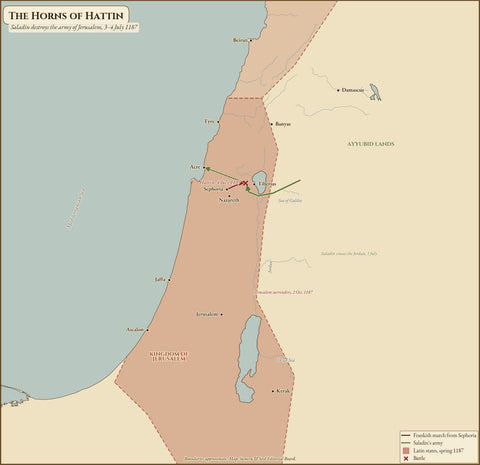 Saladin and the Horns of Hattin, 1187
On 4 July 1187, on a hill above the Sea of Galilee, Saladin destroyed the largest army the Kingdom of Jerusalem ever raised. Three months later he entered Jerusalem. How did a summer march...
Sumeru & Seed Editorial Board · 6 min read
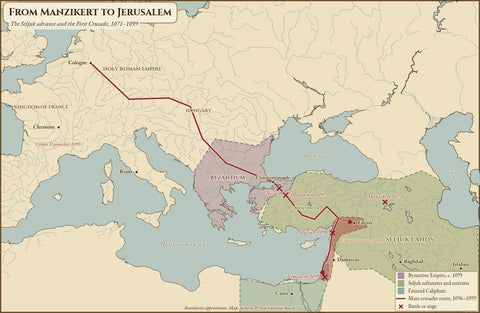 From Manzikert to Jerusalem: The Seljuks, Byzantium and the Origins of the Crusades
The First Crusade is usually told as a story that begins with a pope's sermon in France. It makes more sense if it begins twenty-four years earlier, on a battlefield in eastern Anatolia, where...
Sumeru & Seed Editorial Board · 6 min read
 CHAPTER VI · 1206–1281 CEThe Mongol Campaigns
4 essays
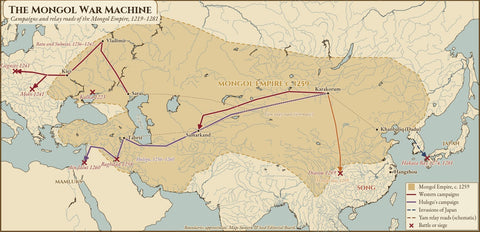 The Mongol Conquests (1206–1279): How the Largest Land Empire Was Made
In 1206 a steppe chief named Temüjin took the title Genghis Khan. Within three generations his family ruled from Korea to Hungary, the largest connected land empire in history.
Sumeru & Seed Editorial Board · 4 min read
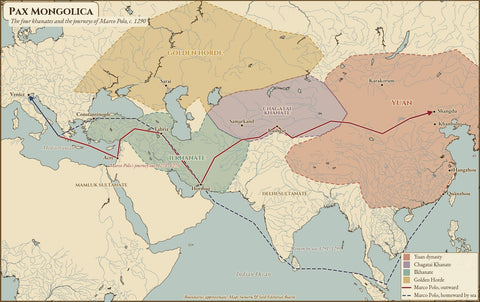 Pax Mongolica: Silk, Paper Money and Ideas Across Eurasia
The Mongol conquests killed millions. They also created, for about a century, the most open set of routes across Eurasia the world had known — the age of Marco Polo, of a Nestorian monk...
Sumeru & Seed Editorial Board · 6 min read
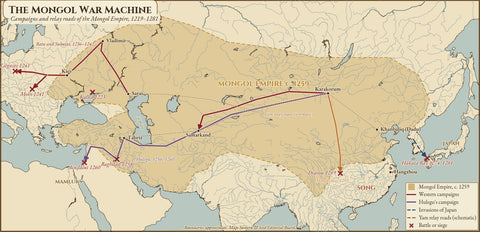 The Mongol War Machine: Decimal Armies, Relay Roads and Siege Engineers
The Mongols were not an endless horde. They were a relatively small people who built the most effective military organisation of the pre-modern world — and then used the skills of everyone they conquered.
Sumeru & Seed Editorial Board · 5 min read
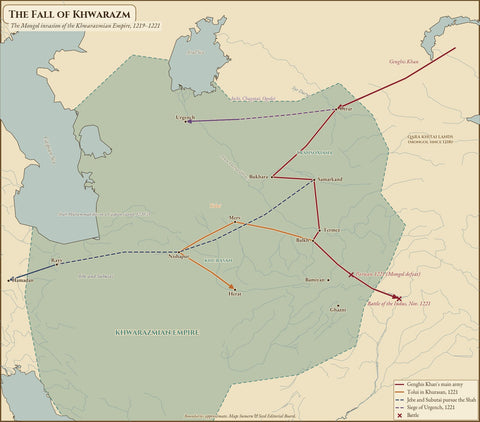 The Fall of Khwarazm, 1219–1221: How a Massacre of Merchants Brought the Mongols West
In 1218 the Khwarazm-Shah Muhammad ruled the most powerful Muslim state in the East. Three years later his empire was gone, its great cities in ruins. The war that destroyed it began with a...
Sumeru & Seed Editorial Board · 6 min read
 CHAPTER VIII · 1776–1815 CEThe Age of Revolutions
5 essays
 The Napoleonic Wars (1803–1815): From Austerlitz to Waterloo
For twelve years one man's army fought every great power of Europe, most of them several times. It won nearly all its battles and lost the war.
Sumeru & Seed Editorial Board · 4 min read
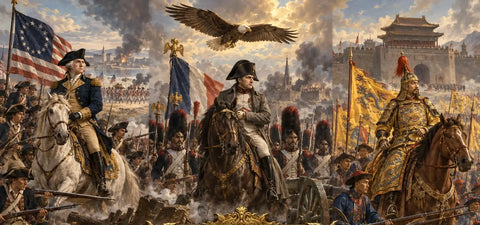 The American Revolutionary War (1775–1783): From Lexington to Yorktown
Thirteen colonies with no army, no navy and no money went to war with the strongest power of the age. Eight years later Britain recognised the United States.
Sumeru & Seed Editorial Board · 4 min read
 The French Revolution: How a Bankrupt Kingdom Became a Nation in Arms
In ten years France abolished feudalism, executed its king, fought most of Europe and invented the mass citizen army. The Revolution of 1789 did not only change France: it changed what a state could...
Sumeru & Seed Editorial Board · 4 min read
 From the Seven Years' War to American Independence: One Long War for a Continent
The shots that began the Seven Years' War were fired by a twenty-two-year-old Virginian officer named George Washington. Twenty years later the same man led an army against the king he had served —...
Sumeru & Seed Editorial Board · 4 min read
 Coal, Cotton and Steam: How Britain's Industrial Age Began
In 1700 Britain was a middling kingdom of farmers and wool merchants. By 1815 it was spinning the world's cotton, paying for other nations' armies and burning more coal than the rest of Europe...
Sumeru & Seed Editorial Board · 4 min read
The great battles of each chapter: the ground, the armies, the commanders and how the day was won — with the battlefield as it is played in Sumeru Chess.
 CHAPTER II · c. 480–326 BCEThe Wars of Alexander and the Greeks
3 battles
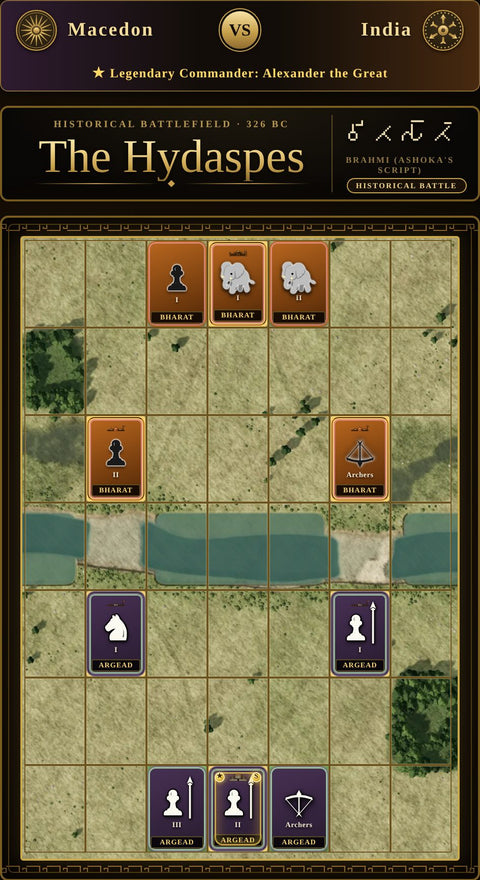 The Battle of the Hydaspes, 326 BCE: Alexander against Porus
A monsoon river in flood, an Indian king on the far bank and two hundred elephants that no Macedonian horse would face. Alexander crossed upstream in a thunderstorm at night — and fought the...
Sumeru & Seed Editorial Board · 3 min read
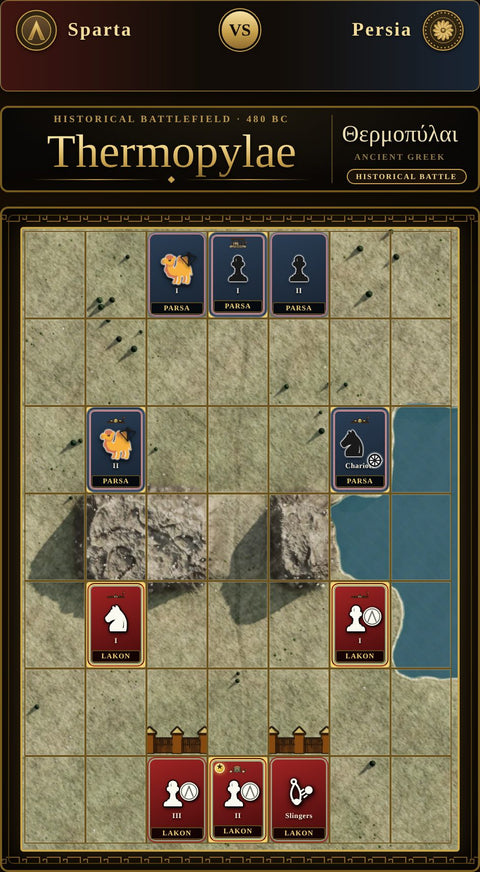 The Battle of Thermopylae, 480 BCE: Leonidas at the Hot Gates
Between the mountains and the sea the road was barely wide enough for a cart. For two days some 7,000 Greeks held it against the largest army the world had seen; on the third,...
Sumeru & Seed Editorial Board · 3 min read
 The Battle of Gaugamela, 331 BCE: Alexander and Darius on the Plain
On a plain Darius III had levelled for his chariots, Alexander led 47,000 men against the army of the whole Persian Empire, slid his line to the right until a gap opened, and drove...
Sumeru & Seed Editorial Board · 4 min read

 CHAPTER III · 216 BC – 53 BCRome, Carthage, Parthia and Han
8 battles
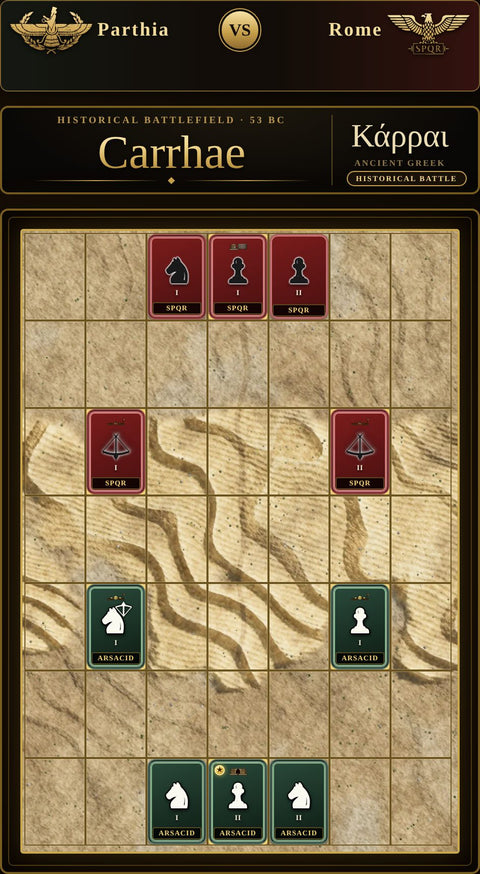 The Battle of Carrhae, 53 BC: Crassus and the Parthian Arrows
Seven legions marched into the open plain to win Crassus a war. Ten thousand Parthian horsemen, fed by a camel train of arrows, shot them to pieces without ever closing. Rome's eagles hung in...
Sumeru & Seed Editorial Board · 4 min read
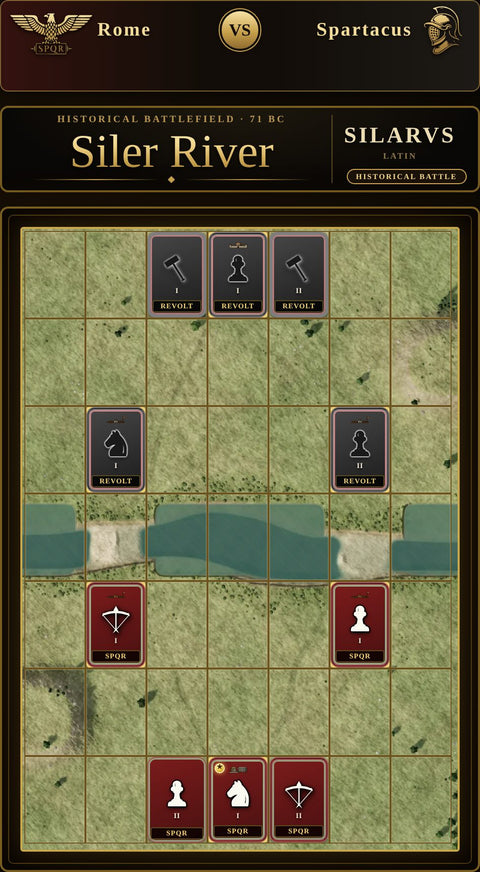 The Battle of the Silarius River, 71 BC: Spartacus' Last Stand
Cornered between Crassus' legions and two more Roman armies on the way, Spartacus killed his own horse before the battle — he would win and take the enemy's, or need none. He died fighting...
Sumeru & Seed Editorial Board · 4 min read
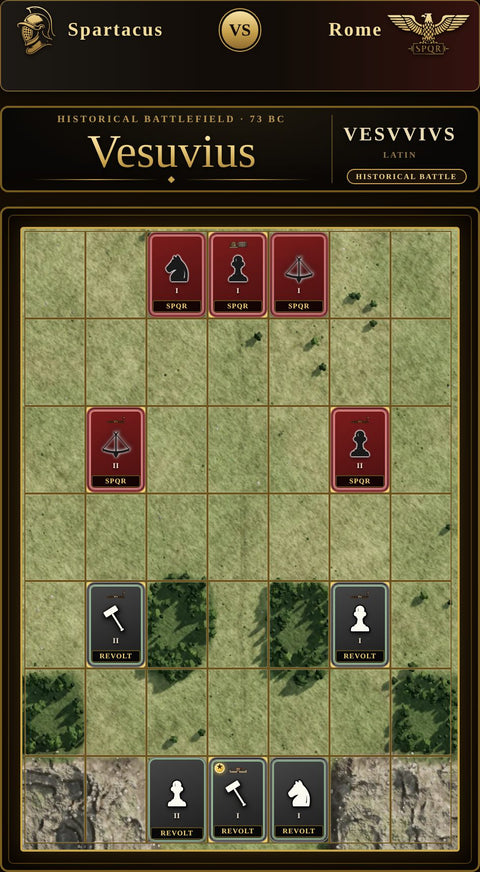 The Battle of Mount Vesuvius, 73 BC: Spartacus Breaks the Blockade
Trapped on a mountain with one path down — and a Roman army sitting on it — the escaped gladiators of Capua made ladders of wild vines, climbed down the cliffs at night and...
Sumeru & Seed Editorial Board · 4 min read
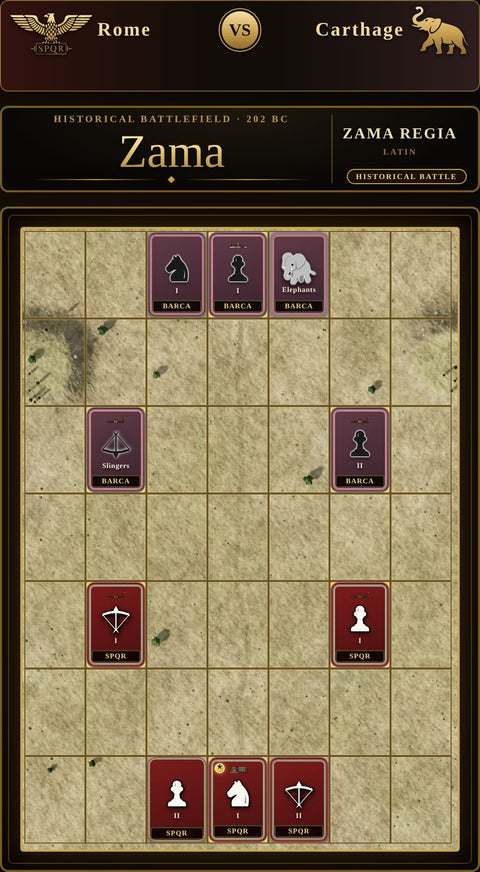 The Battle of Zama, 202 BC: Scipio against Hannibal
The two greatest generals of the age met at last. Hannibal led with eighty war elephants; Scipio had left lanes in his line to swallow them. The cavalry that won it had once ridden...
Sumeru & Seed Editorial Board · 4 min read
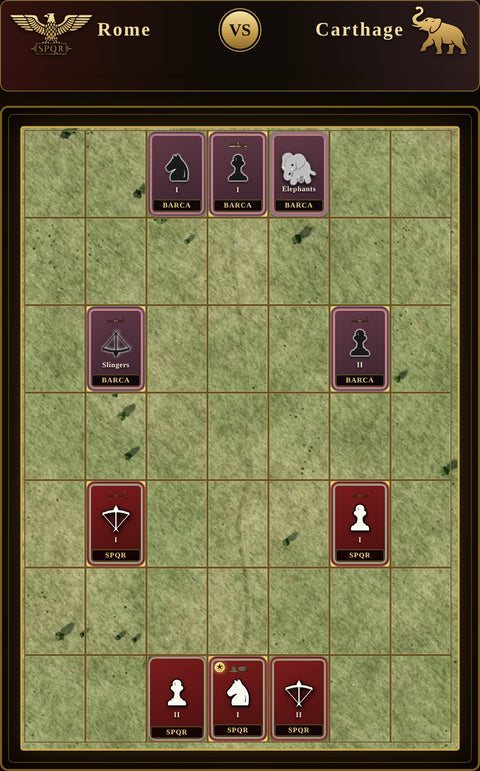 The Battle of Ilipa, 206 BC: Scipio's Masterpiece in Spain
For days the two armies formed up, stared at each other and went back to camp — always in the same order. Then one morning Scipio came out early, with his line turned inside...
Sumeru & Seed Editorial Board · 4 min read
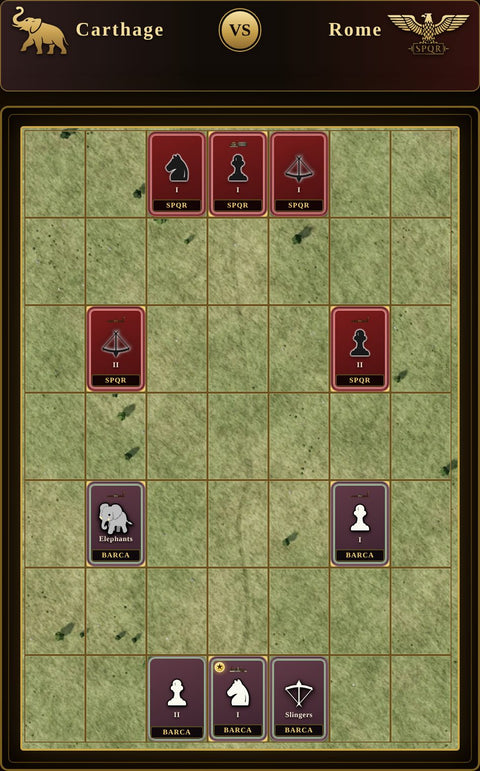 The Battle of Lake Trasimene, 217 BC: The Ambush in the Mist
A Roman army marched along a lake shore in the morning fog. The hills above it were full of Carthaginians. In about three hours the consul was dead and his army gone — the...
Sumeru & Seed Editorial Board · 4 min read
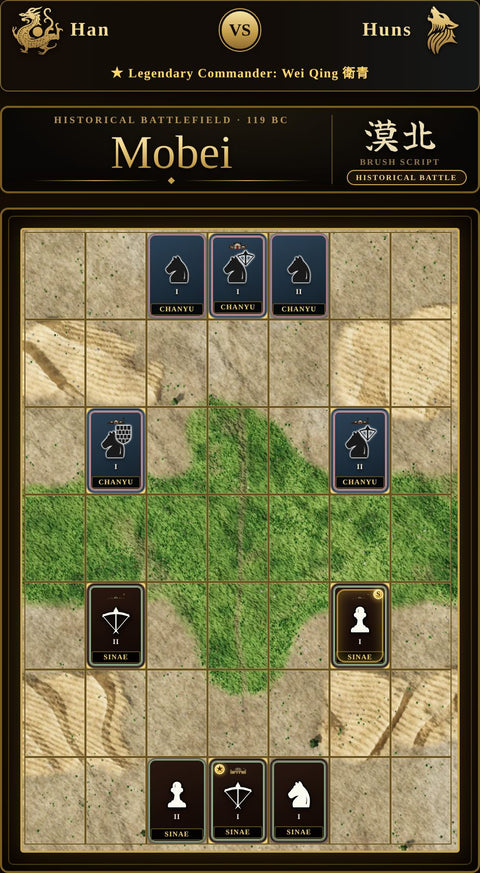 The Battle of Mobei, 119 BC: Han China Strikes Across the Gobi
Emperor Wu sent two armies of 50,000 horsemen each across the Gobi desert to find the Xiongnu in their own homeland. Wei Qing caught the chanyu at dusk in a sandstorm; Huo Qubing rode...
Sumeru & Seed Editorial Board · 3 min read
 The Battle of Cannae, 216 BC: Hannibal's Double Envelopment
Outnumbered almost two to one, Hannibal let the largest army Rome had ever raised push into his centre — then closed both wings and his cavalry around it. By evening some 50,000 Romans lay...
Sumeru & Seed Editorial Board · 5 min read

 CHAPTER IV · 751–971 CEVikings, Caliphs and Emperors
3 battles
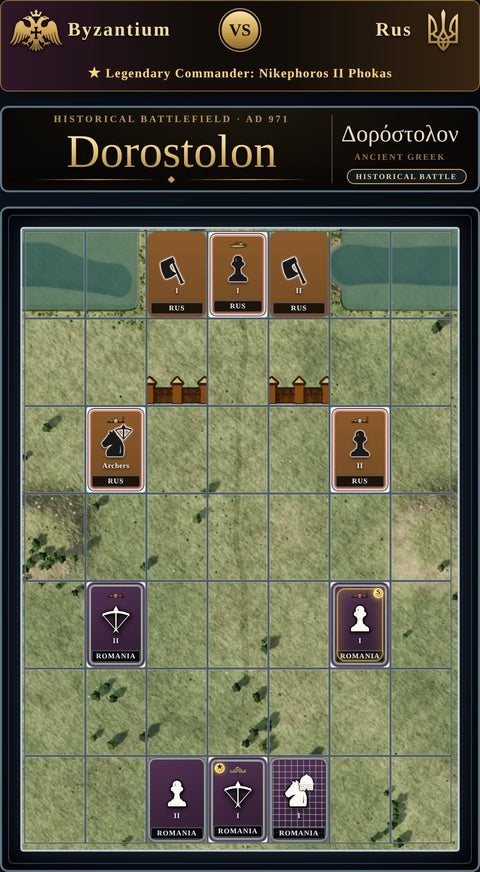 The Siege of Dorostolon, 971: Byzantium against the Rus
The prince of Kiev wanted to move his capital to the Danube. The emperor came to stop him with his armoured horsemen and his fireships. For three months the Rus held the walls of...
Sumeru & Seed Editorial Board · 3 min read
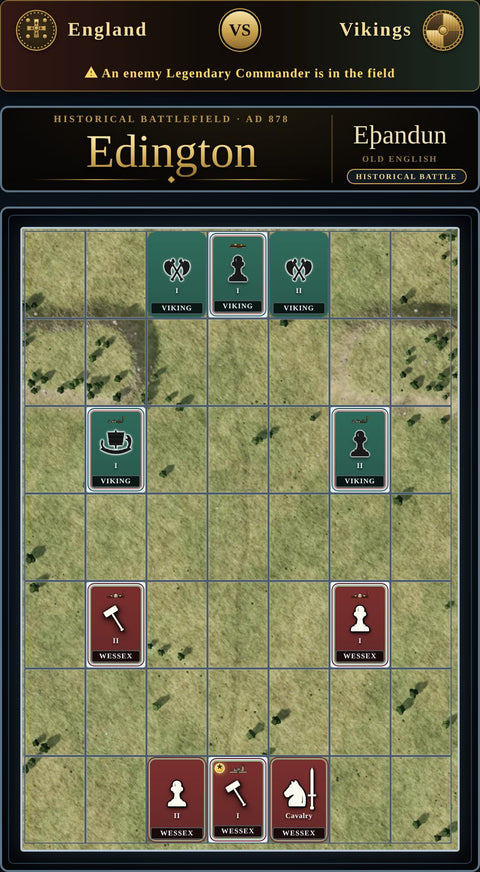 The Battle of Edington, 878: Alfred the Great Saves Wessex
In January the Vikings caught Alfred by surprise and he fled into the marshes of Somerset with a handful of men. Five months later he came out with the levies of three shires, broke...
Sumeru & Seed Editorial Board · 3 min read
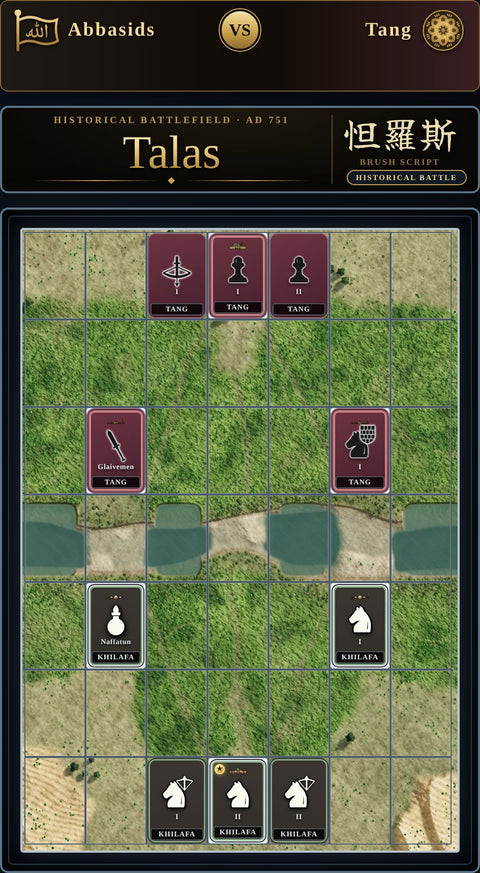 The Battle of Talas, 751: The Caliphate Meets the Tang
Two great empires met only once on a battlefield — on the banks of a Central Asian river. For five days the Tang army held; then its Karluk allies turned on it, and the...
Sumeru & Seed Editorial Board · 3 min read
 CHAPTER V · 1177–1191 CEThe Crusades
3 battles
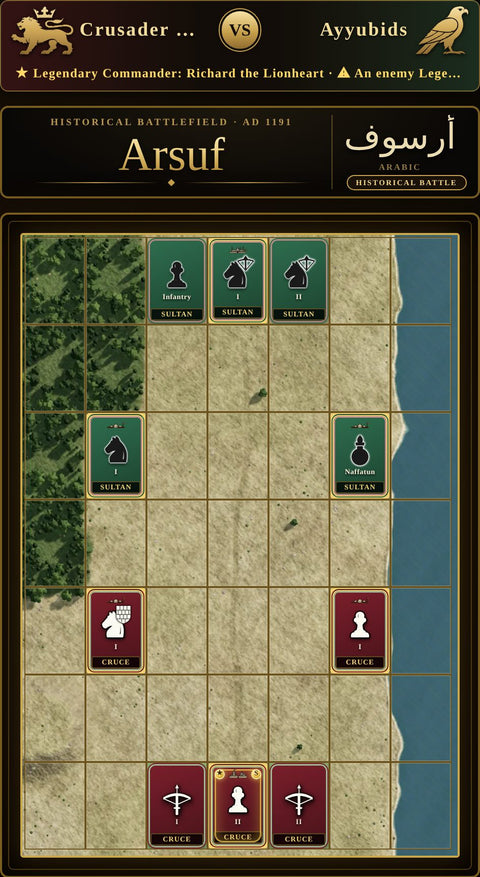 The Battle of Arsuf, 1191: Richard the Lionheart against Saladin
With the sea on one side and Saladin's horse archers on the other, Richard's army marched south in a moving fortress, crossbowmen outside, knights inside. At Arsuf the knights finally charged — and Saladin...
Sumeru & Seed Editorial Board · 3 min read
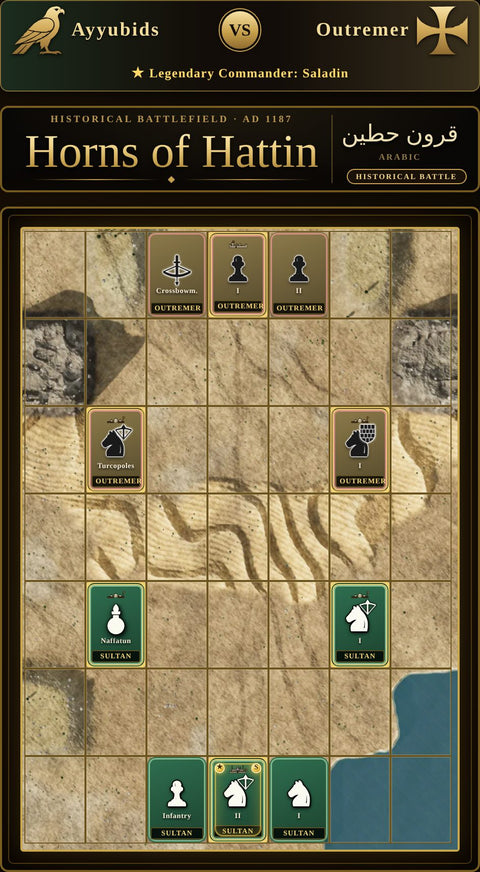 The Battle of Hattin, 1187: Saladin Destroys the Army of Jerusalem
The whole army of the kingdom of Jerusalem marched across a waterless plateau in the July heat to relieve Tiberias. Saladin let it come, cut it off from the lake, set the dry grass...
Sumeru & Seed Editorial Board · 3 min read
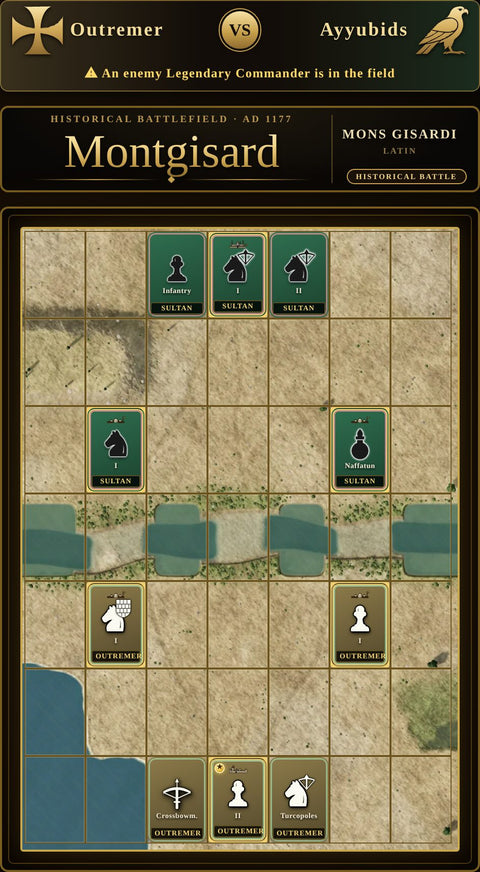 The Battle of Montgisard, 1177: The Leper King Defeats Saladin
Saladin invaded with a great army and left a sick sixteen-year-old king shut up in Ascalon. The king broke out with a few hundred knights, caught the Ayyubid army scattered and unready, and sent...
Sumeru & Seed Editorial Board · 3 min read
 CHAPTER VI · 1241–1273 CEThe Mongol Wars
3 battles
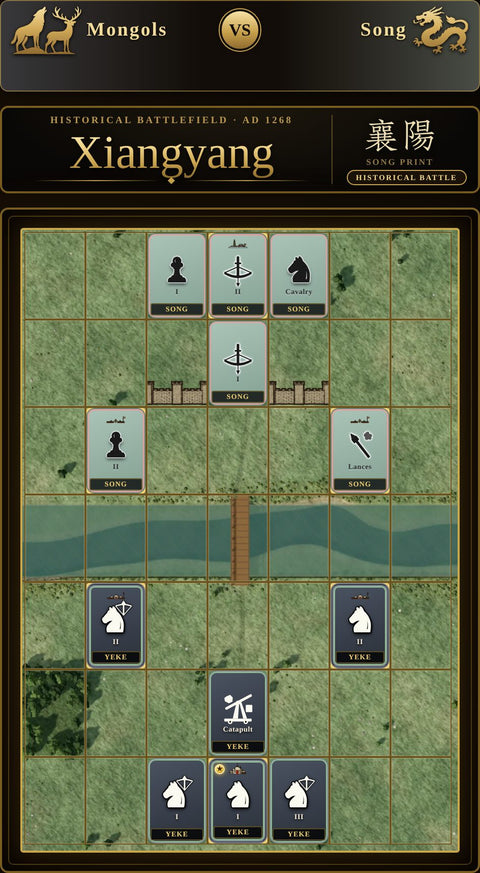 The Siege of Xiangyang, 1268–1273: The Key to Southern China
Two walled cities faced each other across the Han river, joined by a floating bridge: Xiangyang and Fancheng, the gate to the Yangtze. Kublai Khan's army sat before them for almost six years —...
Sumeru & Seed Editorial Board · 3 min read
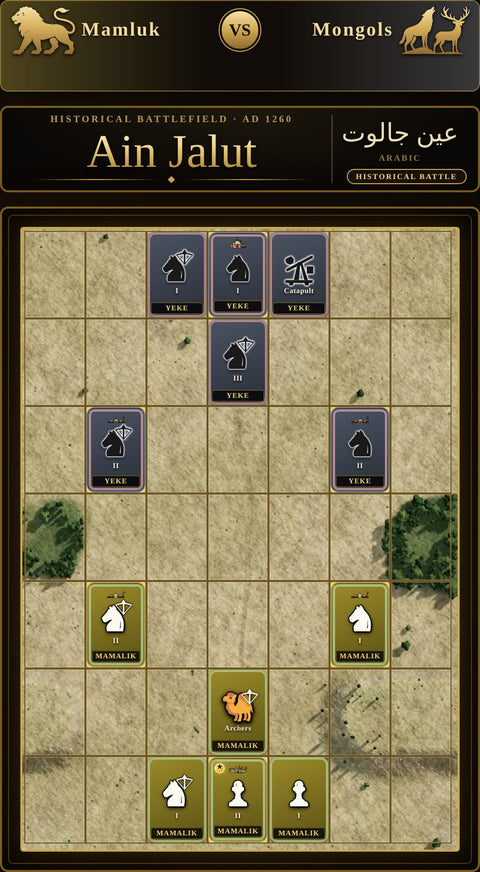 The Battle of Ain Jalut, 1260: The Mamluks Stop the Mongols
Baghdad had fallen and Damascus had surrendered. Then the Mongol main army went home, and the Mamluk sultan of Egypt rode out to meet the force it left behind. At the Spring of Goliath...
Sumeru & Seed Editorial Board · 3 min read
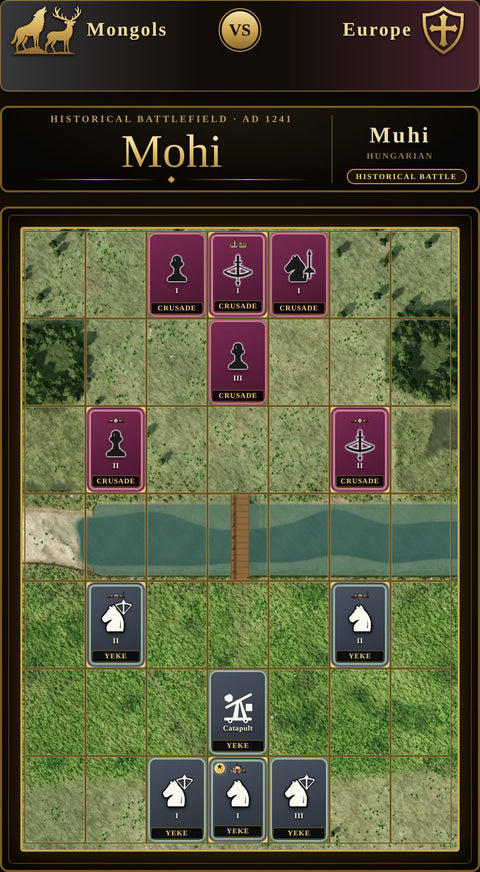 The Battle of Mohi, 1241: The Mongols Destroy the Army of Hungary
The Hungarians held the only bridge over the Sajó and camped behind a ring of wagons. The Mongols cleared the bridge with stone-throwers, sent a second army across the river downstream in the dark...
Sumeru & Seed Editorial Board · 3 min read
 CHAPTER VIII · 1758–1815 CEMuskets, Guns and Empires
3 battles
 Waterloo, 1815: Who Defeated Napoleon?
The British say Wellington. The Germans say Blücher. The French have blamed Ney, Grouchy, the rain and the Emperor's health. Two hundred years on, the best answer to the most famous question in military...
Sumeru & Seed Editorial Board · 4 min read
 The Battle of Austerlitz, 1805: Napoleon's Masterpiece
He gave up the best ground on the field, showed his enemies a weak flank and invited them to attack it. When two emperors took the bait, Napoleon broke their army in half on...
Sumeru & Seed Editorial Board · 4 min read
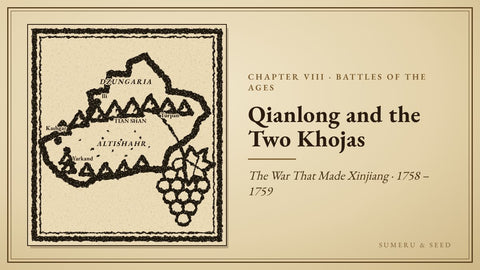 Qianlong and the Two Khojas, 1758–1759: The War That Made Xinjiang
Besieged for three months in a camp by the Black Water, a Qing general held out against the armies of two brothers who claimed descent from the Prophet. When the war ended, the Qing...
Sumeru & Seed Editorial Board · 4 min read
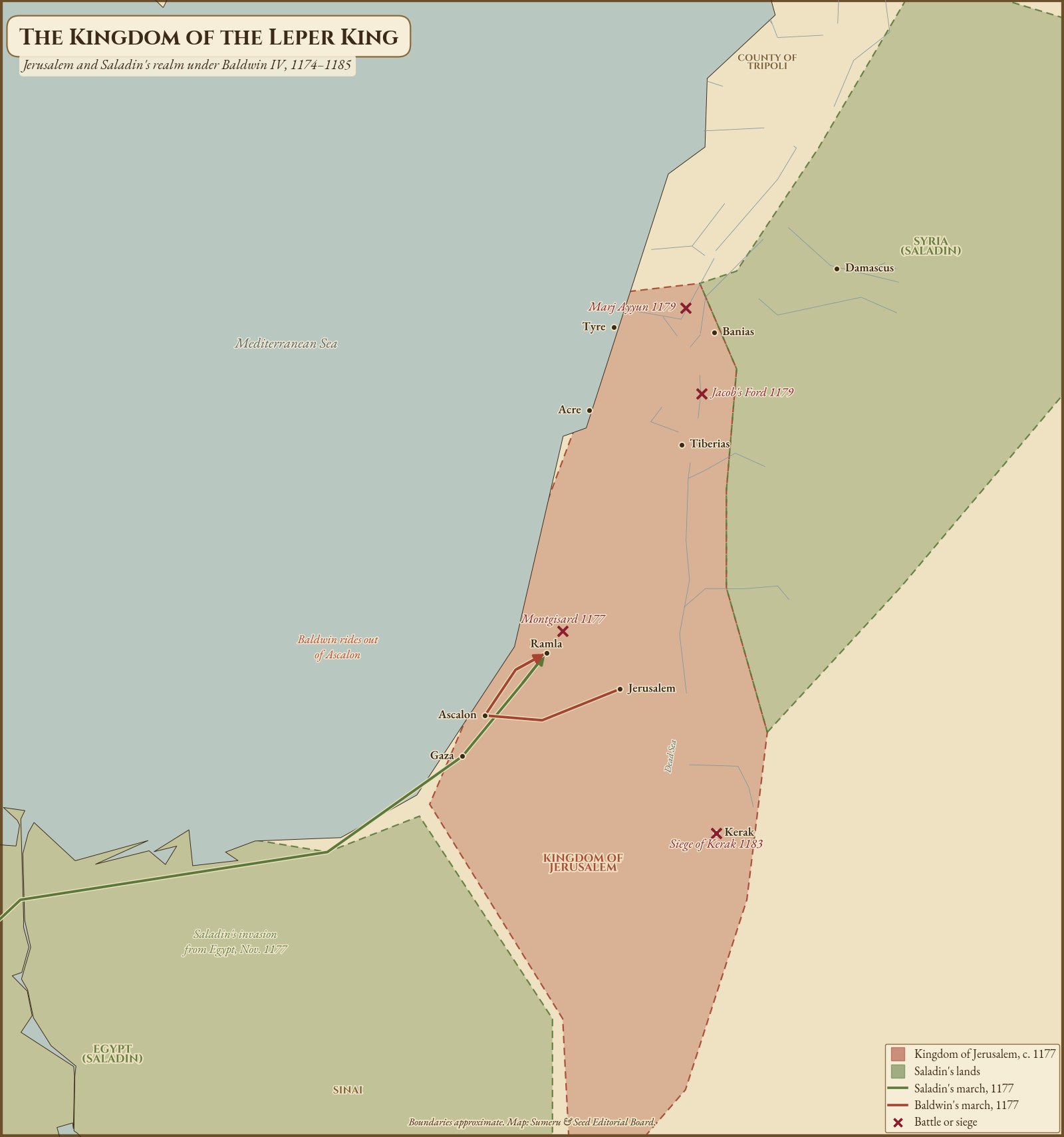
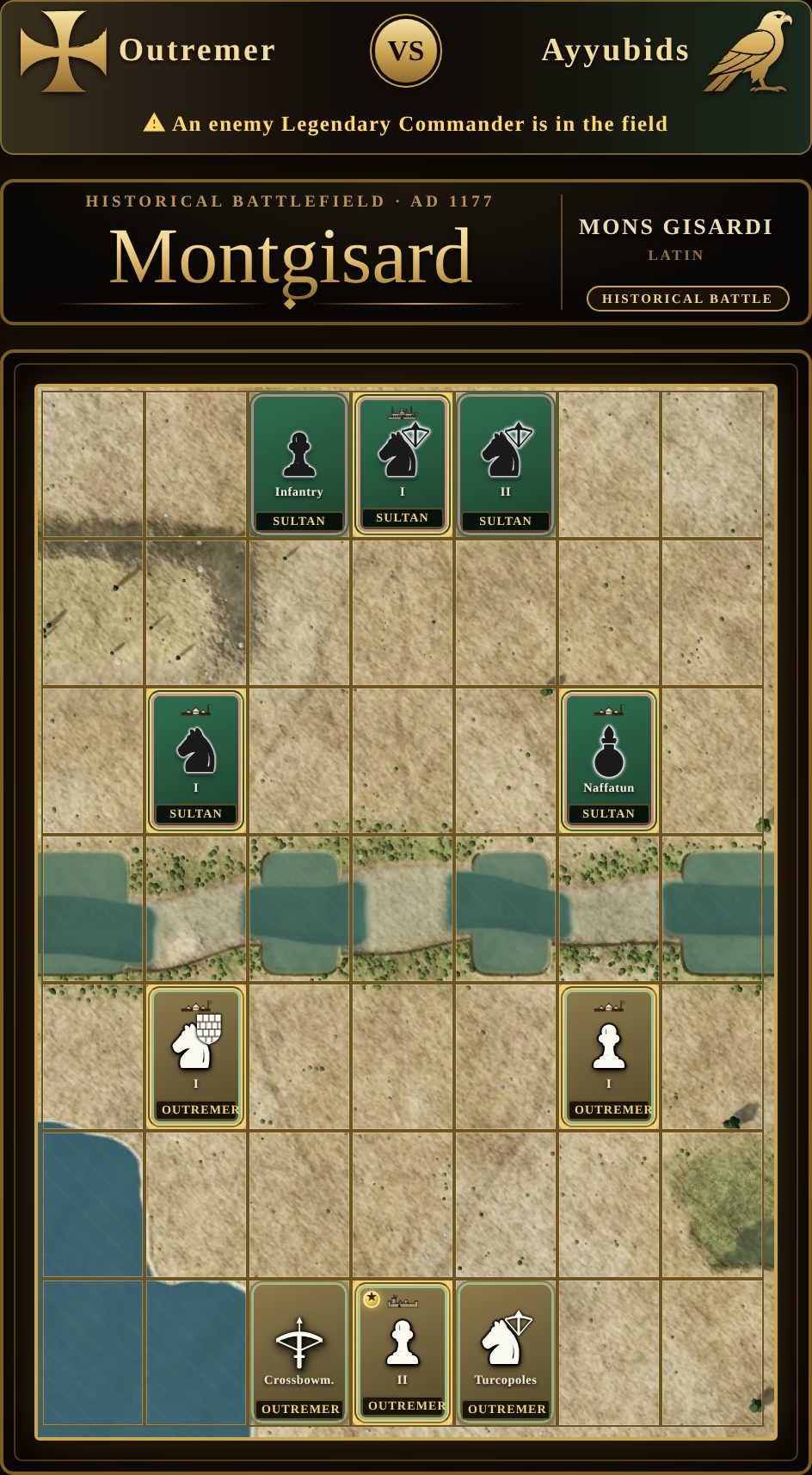 Baldwin IV, the Leper King: The Real King Behind the Mask in Kingdom of Heaven
He was crowned at thirteen, knew he had leprosy, beat Saladin at sixteen and ruled until he could no longer see or walk. The masked king of Kingdom of Heaven was a real man,...
Sumeru & Seed Editorial Board · 5 min read
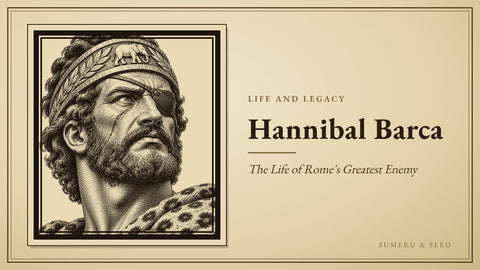 漢尼拔·巴卡:羅馬最強大敵人的一生
他率領戰象翻越阿爾卑斯山,在義大利縱橫十五年、屢屢摧毀羅馬大軍,卻始終沒有攻下羅馬。漢尼拔的一生,是天才、堅忍,以及一位將領對抗一個國家時所能做到的極限。
Sumeru & Seed Editorial Board · 1 min read
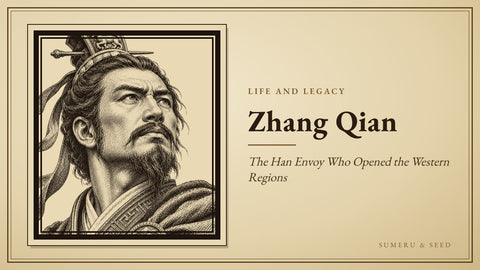 Zhang Qian: The Han Envoy Who Opened the Western Regions
Sent west to find allies against the Xiongnu, Zhang Qian spent ten years as a captive, failed in his mission and came home with only one companion. What he brought back — knowledge —...
Sumeru & Seed Editorial Board · 6 min read
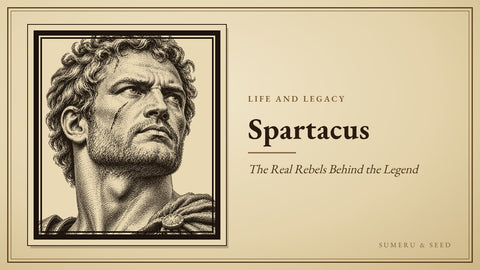 Spartacus: The Real Rebels Behind the Legend
How accurate is Spartacus: Blood and Sand? This article reveals which characters and battles are real, which are fictional, and what the series leaves out.
Sumeru & Seed Editorial Board · 3 min read
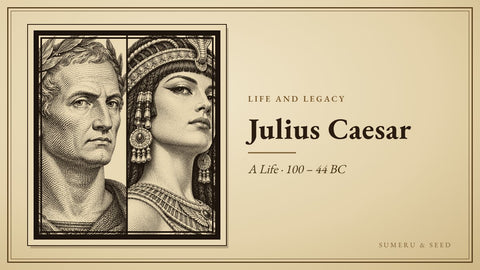 Life of Julius Caesar
Explore how Julius Caesar rose to power through war and reform, conquered Gaul, and reshaped Rome, leading to the fall of the Republic and the rise of the Roman Empire.
Sumeru & Seed Editorial Board · 2 min read
 Why Was Julius Caesar Assassinated?
Why was Julius Caesar assassinated? Explore the political tensions, fear of tyranny, and power struggles that led to the Ides of March—and how his death changed Rome forever.
Sumeru & Seed Editorial Board · 3 min read
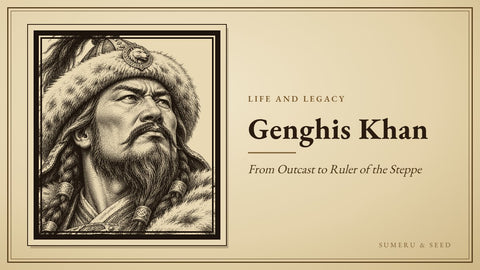 Genghis Khan: From Outcast to Ruler of the Steppe
Abandoned by his clan as a boy, Temüjin survived hunger, captivity and betrayal to unite the peoples of the steppe in 1206. The empire he left behind would reach from Korea to Hungary. Who...
Sumeru & Seed Editorial Board · 5 min read
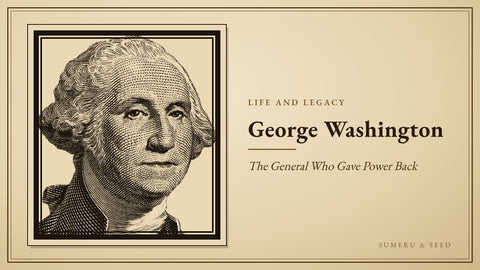 George Washington: The General Who Gave Power Back
He lost more battles than he won. His greatness lay elsewhere: in keeping an army alive for eight years, and then — twice — in walking away from power when he could have kept...
Sumeru & Seed Editorial Board · 4 min read
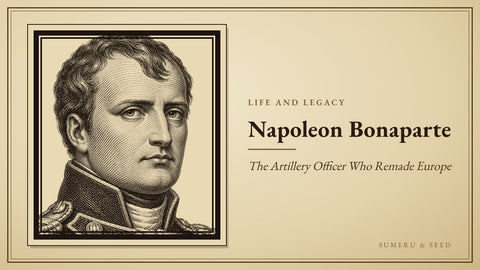 Napoleon Bonaparte: The Artillery Officer Who Remade Europe
Born on a poor island a year after it became French, he was a general at twenty-four, master of France at thirty and of Europe at thirty-seven. Eight years later he was a prisoner...
Sumeru & Seed Editorial Board · 4 min read

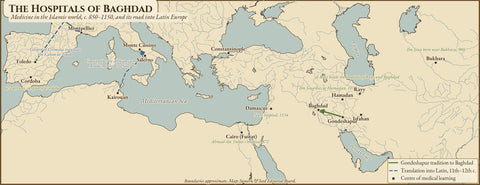 The Hospitals of Baghdad: al-Razi, Ibn Sina and Medicine in the Islamic World
Between the ninth and twelfth centuries, physicians in Baghdad, Rayy, Bukhara, Cairo and Cordoba translated Greek medicine, tested it against their own experience and built hospitals open to all. Their books were still being...
Sumeru & Seed Editorial Board · 6 min read
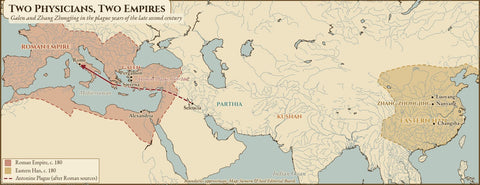 Galen and Zhang Zhongjing: Two Physicians in an Age of Plague
At the end of the second century CE, as epidemics swept both ends of Eurasia, a Greek doctor in Rome and a Chinese physician in the Han empire wrote the works that would define...
Sumeru & Seed Editorial Board · 6 min read
 Medicine in Rome vs Han: A Comparative Analysis
This article compares Rome and Han China (300–200 BCE), showing how two unconnected empires developed similar economic, demographic, and medical systems under the same pressures of war, growth, and governance. — Johnny Z. Institute...
Johnny Zhu · 3 min read
Every essay in the Library cites its sources. If you find an error, write to us — scholarship is a conversation.